Post-War and the evolution of Haute Couture
- Camz

- 25 févr. 2025
- 3 min de lecture
Dernière mise à jour : 29 mars 2025
The end of World War II marks a major turning point in the fashion world. Until then, haute couture was dominated by the craftsmanship of ateliers and the expertise of traditional couturiers. However, haute couture undergoes a profound transformation. From now on, fame no longer rests solely on fashion houses but on the designers themselves. This period sees the emergence of talents who will redefine the industry, under the watchful eye of a press eager for novelties.
Hubert de Givenchy and the transition to creation
From his years of training at the Fine Arts, Hubert de Givenchy explored the world of fashion by working alongside iconic figures such as Jacques Fath and Robert Piguet.

In 1944, he joined the Lucien Lelong house alongside Pierre Balmain, Christian Dior, and other future big names. There, he discovered a working process where the designers' sketches were submitted to a decision-making committee before becoming collection pieces.

This centralized method, which limited the creative freedom of designers, gradually disappears after the war, giving way to independent couturiers-creators such as Balmain, Dior, and Givenchy himself.
Seeking greater artistic freedom, Givenchy left Lelong to join Elsa Schiaparelli. There, he discovered a radically different approach, where inspiration came from literature and bold artistic references. Schiaparelli, who had returned to Paris after an exile in the United States, led a workshop where imagination was paramount.

Haute Couture at the dawn of the modern world
The post-war era marks a break from the traditions of the 19th century and ushers in the age of modernism. Europe, though economically and politically weakened, retains undeniable cultural dominance, especially in the realm of fashion. In the face of the United States' emergence as a global superpower, European haute couture plays a crucial role in the reconstruction of a refined and sophisticated way of life.
The impact of the world conflict is felt even in fashion: cuts evolve, skirts lengthen, and luxury becomes a vector for renewal. The industry adapts to new consumer dynamics and the expectations of a more segmented clientele. Fashion houses now target specific markets, highlighting distinct identities.
Iconic Figures of Post-War Fashion
Madame Grès : The Timelessness of Draping

Before the war, under the name Alix, Madame Grès dressed the European elite and cinema icons. After a forced exile, she returns to her fashion house, now under external financial control. Renamed Grès, she continues her style, characterized by draping inspired by ancient statuary. The press, especially Vogue and Elle, praises her work, solidifying her status as an icon of timeless elegance.
Madame Grès et l'art du drapé.
Carven: Fashion for all silhouettes
Carmen de Tommaso, aka Carven, establishes herself with an innovative approach: offering fashion accessible to shorter women. Since the Liberation, her house experiences rapid success, attracting a varied clientele, from actresses to young brides looking for luxurious outfits. In 1948, she produced more than 18,000 pieces per year, a volume worthy of a luxury ready-to-wear house.

Nina Ricci : The discreet prestige

Engineer technician, Nina Ricci attracts a bourgeois clientele seeking elegance and sobriety. In 1945, her house employed 500 artisans and spanned across three buildings in Paris. Under the joint direction of Nina and her son Robert Ricci, the house rose to become one of the international luxury references, blending tradition and modernity.
Towards a structured and mediated fashion
The post-war period marks the peak of fashion media as trendsetters. Vogue, Elle, Harper's Bazaar, and Le Figaro play a strategic role in recognizing designers. Influential figures like Edmonde Charles-Roux and Carmel Snow shape the image of fashion among the general public and elites.
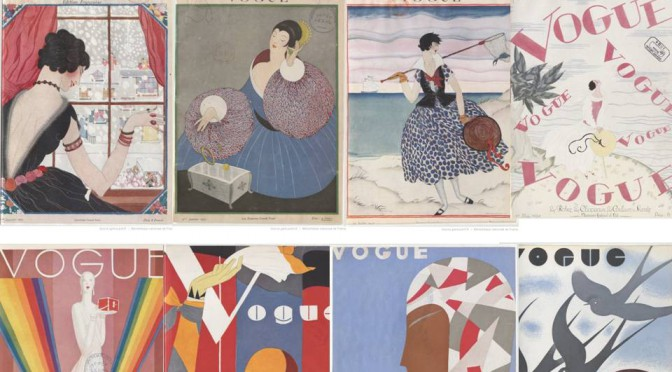
At the same time, the couture houses transform into true structured businesses, catering to an international clientele. This period also sees the rise of press attachés, such as Françoise de Langlade, who assist designers in their quest for visibility.
Conclusion: a new era for Haute Couture
In this rapidly changing world, haute couture becomes more than just craftsmanship: it embodies a true art form, shaped by visionary creators. Hubert de Givenchy, Pierre Balmain, and Christian Dior redefine the codes of luxury, marking the entry of fashion into an era of modernity and increased media exposure.
Far from being destroyed by the war, haute couture emerges stronger, becoming a pillar of Europe's cultural reconstruction. Its international influence, driven by bold houses and charismatic figures, is already laying the groundwork for the explosion of ready-to-wear and the democratization of style in the following decades.

REFERENCES :
Hubert de Givenchy :
Christian Dior :
Madame Grès :
Carven :
Nina Ricci :
Vogue :