
Fendi Fall/Winter 26-27 by Maria Grazia Chiuri
- Camz

- Feb 27
- 4 min read
A collective manifesto with a singular vision
Less I, More Us. The phrase was impossible to miss, stenciled across the runway and woven into the straps of bags, setting the ideological tone of Maria Grazia Chiuri’s debut as chief creative officer at Fendi. The message suggested unity, collaboration, plurality. Yet beneath this collective declaration, the show revealed something equally clear. This was unmistakably a Chiuri vision, structured with precision and intention.

Before the show, the designer emphasized her focus on silhouette. By the finale, it became evident that she was not only redefining the outline of garments but also reshaping the identity of Fendi itself. The collection operated as both homage and recalibration, balancing heritage with personal authorship. Chiuri approached the house not as a neutral platform but as a living organism requiring structural adjustment.
The return of fur as heritage and emotion
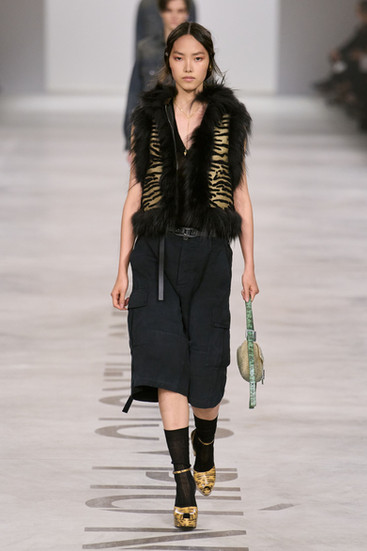
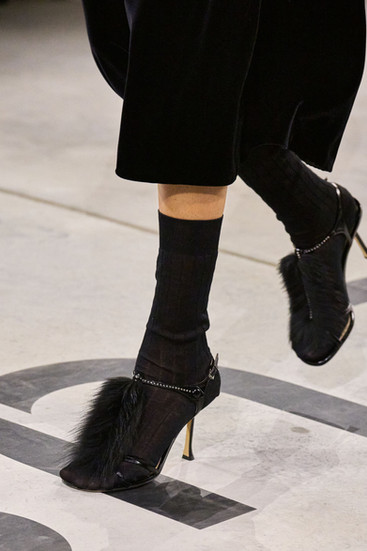
The most striking statement was the unapologetic reassertion of fur. Fendi’s historical expertise lies in fur craftsmanship, yet in recent years the house had softened its emphasis due to shifting global sensitivities. Chiuri reversed that hesitation. Fur appeared everywhere, integrated into trims, collars, fringes, gilets, trench interiors, and most spectacularly within a long black leather coat composed of hand cut floral sections assembled like lace.

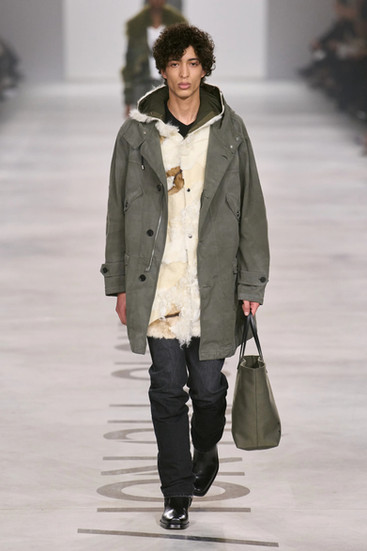
Interestingly, the most extravagant fur pieces were worn by men, subtly disrupting traditional gender codes. A fox toned throwback coat, a long haired green dyed blazer, and a shaggy patchwork composition introduced a trophy like theatricality.

On the womenswear side, one jacket incorporated scraps of fur into woodland camouflage, merging luxury with utilitarian references.

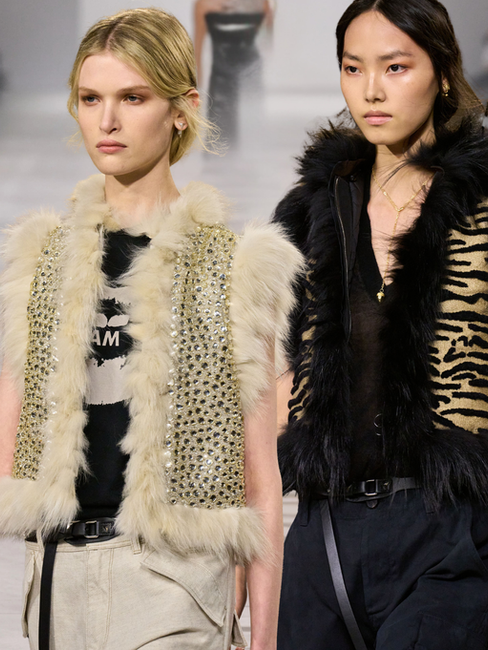

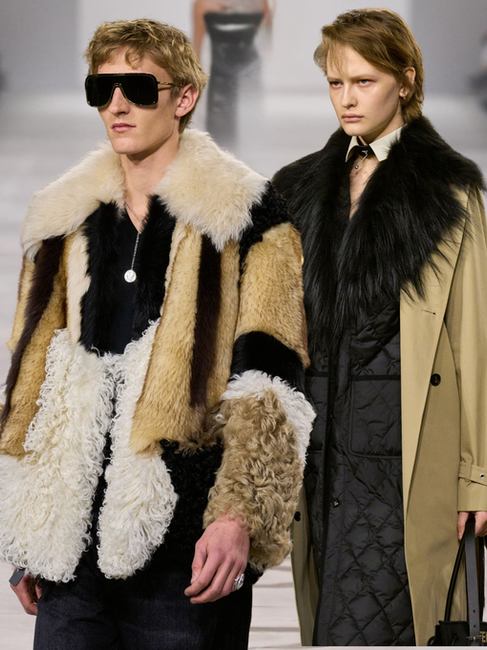
These pieces introduced the Echo Of Love initiative, a project allowing clients to redesign their existing fur garments with Fendi artisans. The concept revolves around emotional durability, the idea that clothing can carry memory, sentiment, and personal narrative. Chiuri highlighted the emotional bond individuals form with objects, suggesting that value extends beyond material to memory itself. The timing feels culturally astute, as vintage fur has quietly reentered the wardrobes of younger urban generations, particularly in cities such as New York.
Personal codes and artistic dialogues
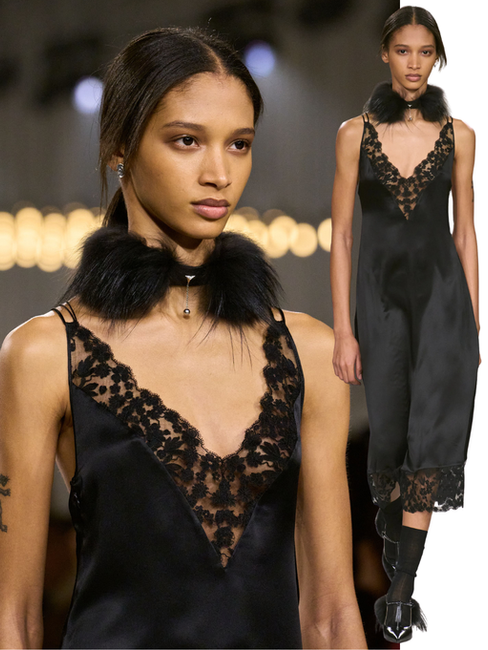
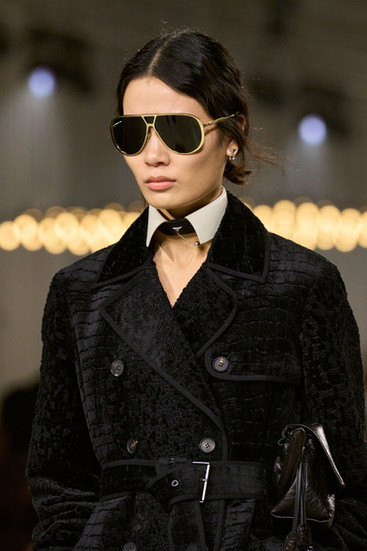
Personalization continued through detachable collars in white cotton, black leather, and fur.



These accessories immediately evoked Karl Lagerfeld’s iconic bespoke shirting, functioning both as tribute and subtle declaration. Notably, only women wore them, reinforcing Chiuri’s ongoing exploration of gender nuance within shared wardrobes.



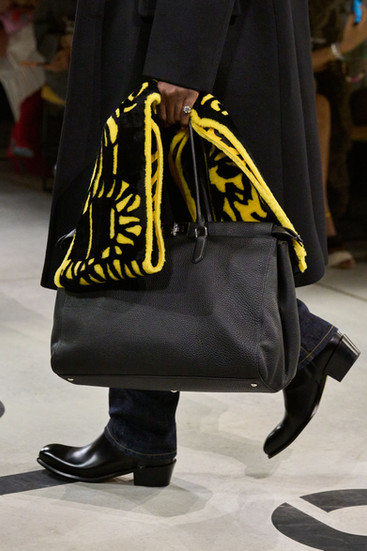
Collaboration played a central role. Artist SAGG Napoli contributed a South Aesthetics perspective through fur football scarves and graphic T shirts referencing the five Fendi sisters, under whom Chiuri began her career decades earlier. Statements such as rooted but not stuck and volcanic but not destructive conveyed identity as fluid rather than fixed.
A second collaboration with the estate of Mirella Bentivoglio reintroduced jewelry and graphic elements originally conceived by the artist, whose work examined gendered language structures. Bentivoglio’s conceptual play between subject and object aligned with Chiuri’s decision to place men in the most visually opulent garments, subtly reversing expectations while questioning symbolic ownership of luxury.
A shared wardrobe grammar
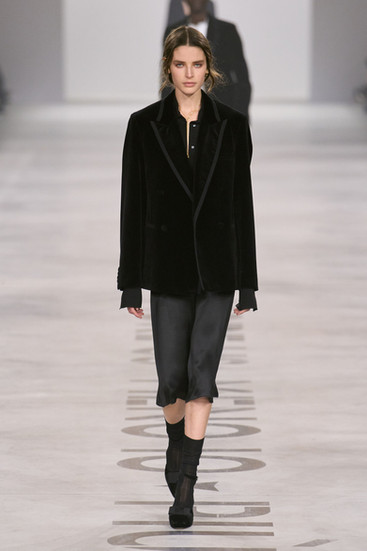
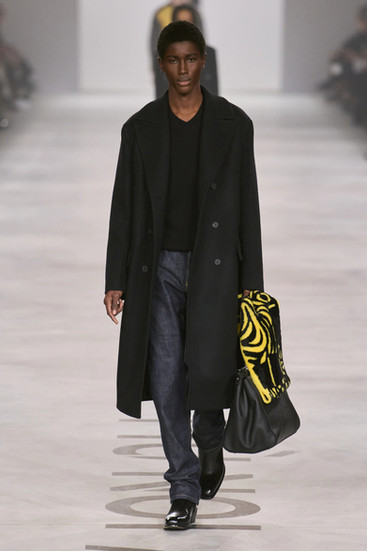
Beyond statement pieces, Chiuri worked to establish a coherent wardrobe language worn by both men and women. Double breasted jackets with neat skirts, strap fastened single breasted tailoring, double denim ensembles, and donkey jacket inspired outerwear appeared across genders. This repetition reinforced the idea of shared clothing codes rather than segregated fashion categories.
The silhouettes maintained clarity and discipline. Structured tailoring anchored the collection, while skirts tapered to emphasize proportion. The designer was building familiarity, encouraging recognition across garments regardless of wearer.
Accessories as structural pillars
Accessories provided another axis of transformation. Chiuri previously contributed to the development of the iconic Baguette bag, and she returned to that heritage with renewed intention. Embroidered beading, fur applications, and artisanal techniques from multiple Fendi departments revitalized the accessory through craft integration.


A practical innovation emerged through the addition of a second strap, allowing the bag to be worn crossbody. This adjustment may appear minor, yet it signals a contemporary shift toward functionality without sacrificing luxury identity. Selleria craftsmanship, Fendi’s second foundational pillar rooted in leatherwork, remained central to the accessory narrative.

The silhouette of an X
The defining visual structure of the collection often resembled an X shape. Deep V necklines created negative space across the torso, while skirts and jackets flared outward from a narrowed waist. This geometry produced both strength and fluidity, echoing signatures recognizable from Chiuri’s previous tenures at Valentino and Dior.

Observers familiar with her work could easily identify recurring codes. Romantic structure, controlled femininity, and symbolic messaging were all present. Less I, More Us may have been the mantra, yet the collection simultaneously asserted Very Her.
Conclusion
Maria Grazia Chiuri’s debut at Fendi functioned as both restoration and authorship. She reintroduced fur without apology, reframed craftsmanship through emotional narrative, and constructed a shared wardrobe vocabulary that blurred gender boundaries while maintaining elegance. Collaboration was emphasized, yet leadership remained unmistakable.
The designer also delivered something more subtle. A reminder that heritage houses evolve not by abandoning identity but by reinterpreting it through contemporary meaning. Chiuri stepped into Fendi with gratitude toward its history and confidence in her own perspective.
Less I, More Us. Perhaps. But also, undeniably, More Chiuri.
ALL THE LOOKS:




















DETAILS:




























PRESS RELEASE:
VIDEO OF THE SHOW:


